Source of Passenger List Image: “New York, New York, Index to Passenger Lists, 1820-1846.” Database with images. FamilySearch. http://FamilySearch.org : 5 December 2020. Citing NARA microfilm publication M261. Washington, D.C.: National Archives and Records Administration, n.d.
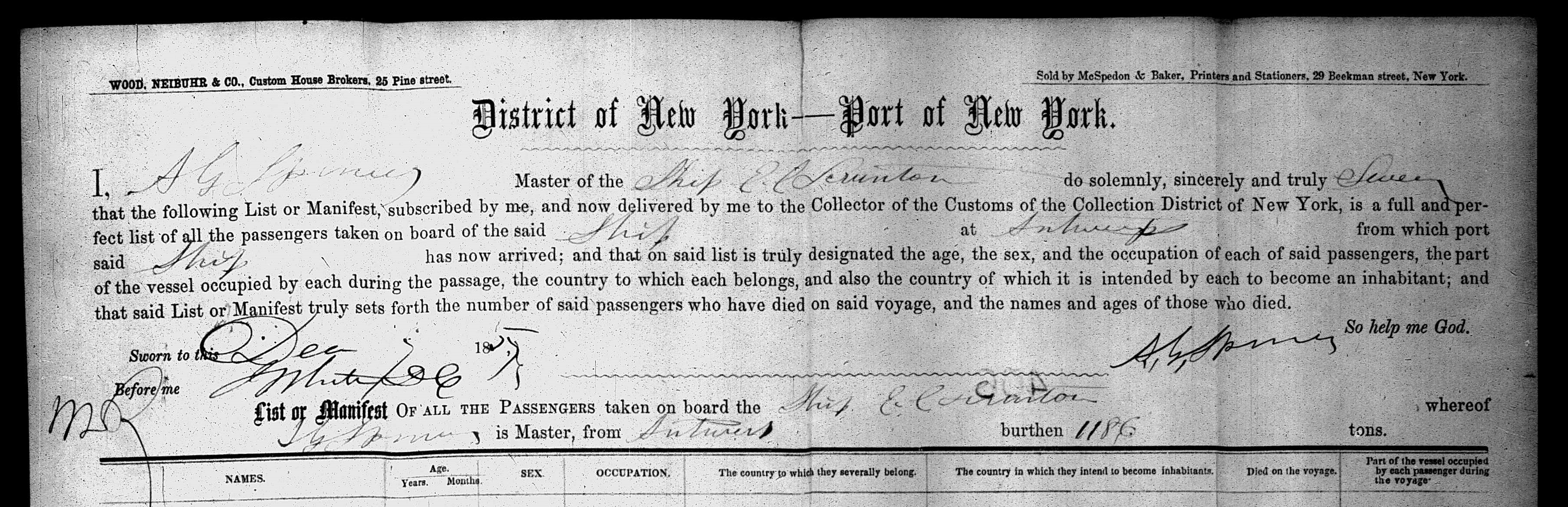
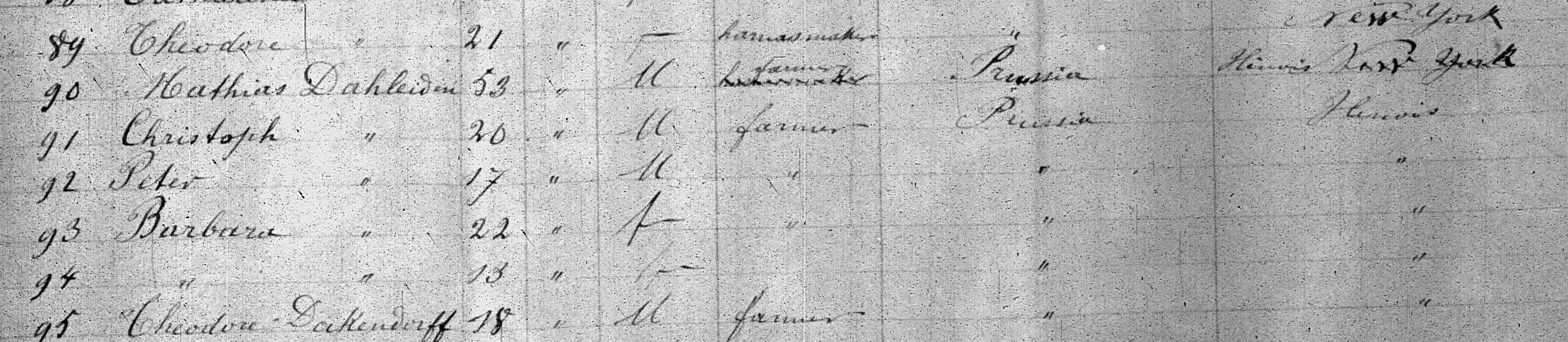
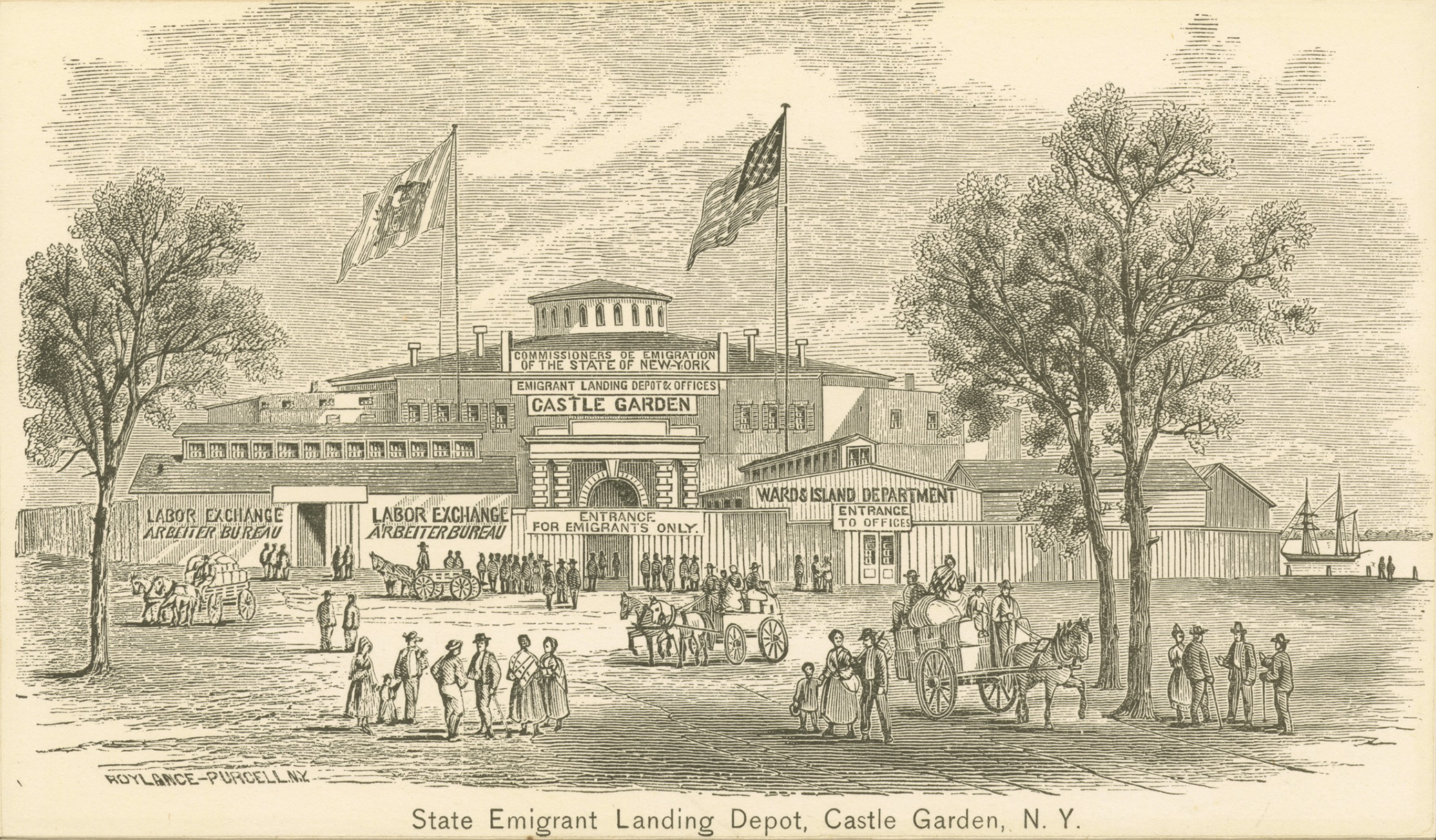
The Matthias Daleiden family arrived in the port of New York, New York City, at Castle Island on the 7 December 1857. Shown above is the actual passenger list. The Daleidens are passenger numbers 90 to 94. The family members (note the absent of Matthia’s eldest son Michael Daleiden) on the ship manifest include: the father Matthias Daleiden (age 53), Christopher (age 20), Peter (age 17), Barbara (age 22) and Barbara (age 13). Matthias and Christopher mention to the port authority they are “farmers” from “Prussia”. Their destination is recorded as “Illinois”. Why two Barbaras? For the answer to that question go to my posting on German naming conventions. For the answer on where Michael is locateed at this time go to my posting regarding Michael’s arrival in America.
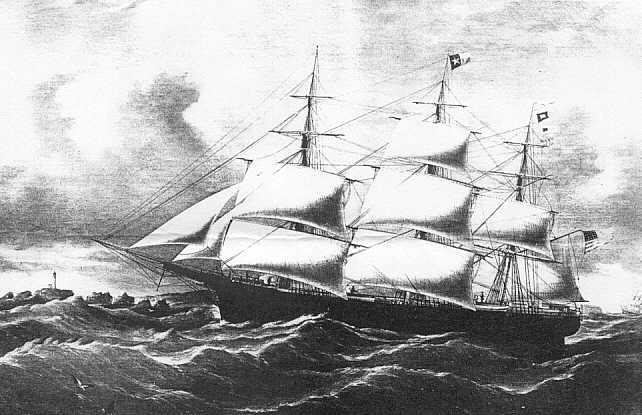
The E. C. Scranton ship that the Daleidens traveled on crossing the North Atlantic Ocean from Antwerp to New York.The trip from Antwerp to New York City was in the nineteenth century 4,000 nautical miles across the North Atlantic Ocean. Source: The Moser Family Genealogy Blog: https://mosergenealogy.wordpress.com/2020/03/13/the-voyage-of-the-barque-hiero/amp/
The family journeyed from the port of Antwerp in Belgium over a seven week period on the choppy waters of the north Atlantic Ocean on the sailing ship the E.C. Scranton. The ship according to records had three decks and three masts. The Scranton weighted 1,186 tons and had been crafted of white oak and cedar and was 180 feet in length the size of a football field and 37 feet in width.
The Daleidens place of origin noted on the passenger list was “Prussia”.
Several questions are now forming as I continue my research journey. Why had the Daleidens and the Schikc come to America? Did they know anyone already living in the United States and in the State of Illinois? What drove Matthias to bring his entire family on an arduous seven-week journey to America? The family would be traveling in all likelihood with people they did not know. Would they survive the seven weeks and not contract any illnesses or a disease? At this point in my research I do not have any concrete answers in writing contained in any letters nor diaries the family left behind. One option is to turn to the writings of other European and German historians in order to gain a general understanding and context of what others immigrants had experienced. I will attempt to answer some of these questions in future posts.
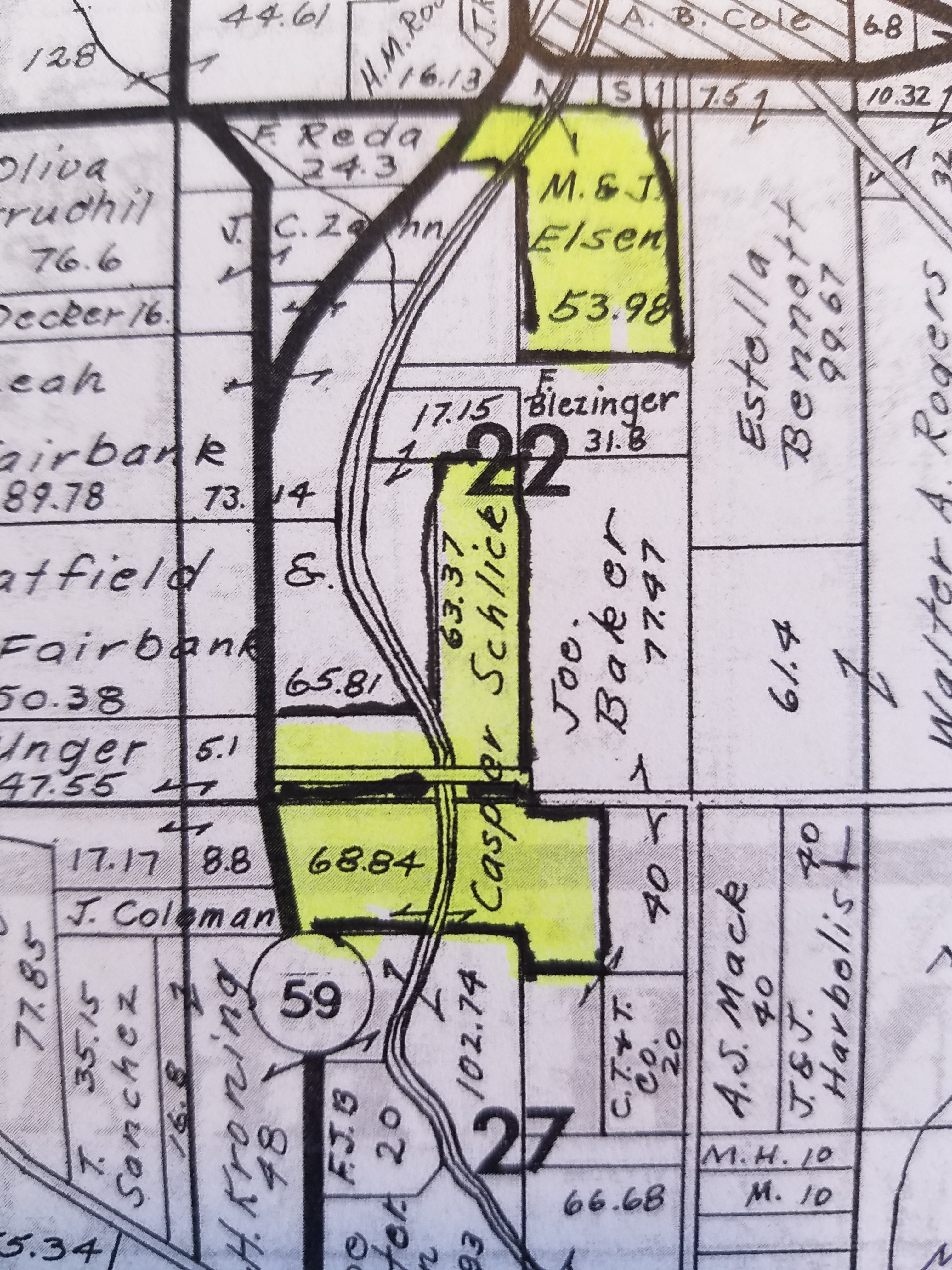
This is an excerpt from a DuPage County Farm Bureau plat book (circa 1940s) showing Casper Schlick owned 132.21 acres. This is along Mack Road in Winfield Township Dupage County Illinoiis. . The other property highlights the property of the Elsens. William T. Daleiden (Susan’s brother) married Susan Elsen the daughter of Matthias Elsen the own of the property to the north of the Schlicks along Gays Mill Road. Both the Schlicks and Elsens lived near the Gary’s Mill School (The School is part of the West Chicago School District).
The Casper and Susan Schlick family and relatives in front of their Mack Road home, circa 1920s. (Photo: Frank J. and Mae C. Schlick Family.).
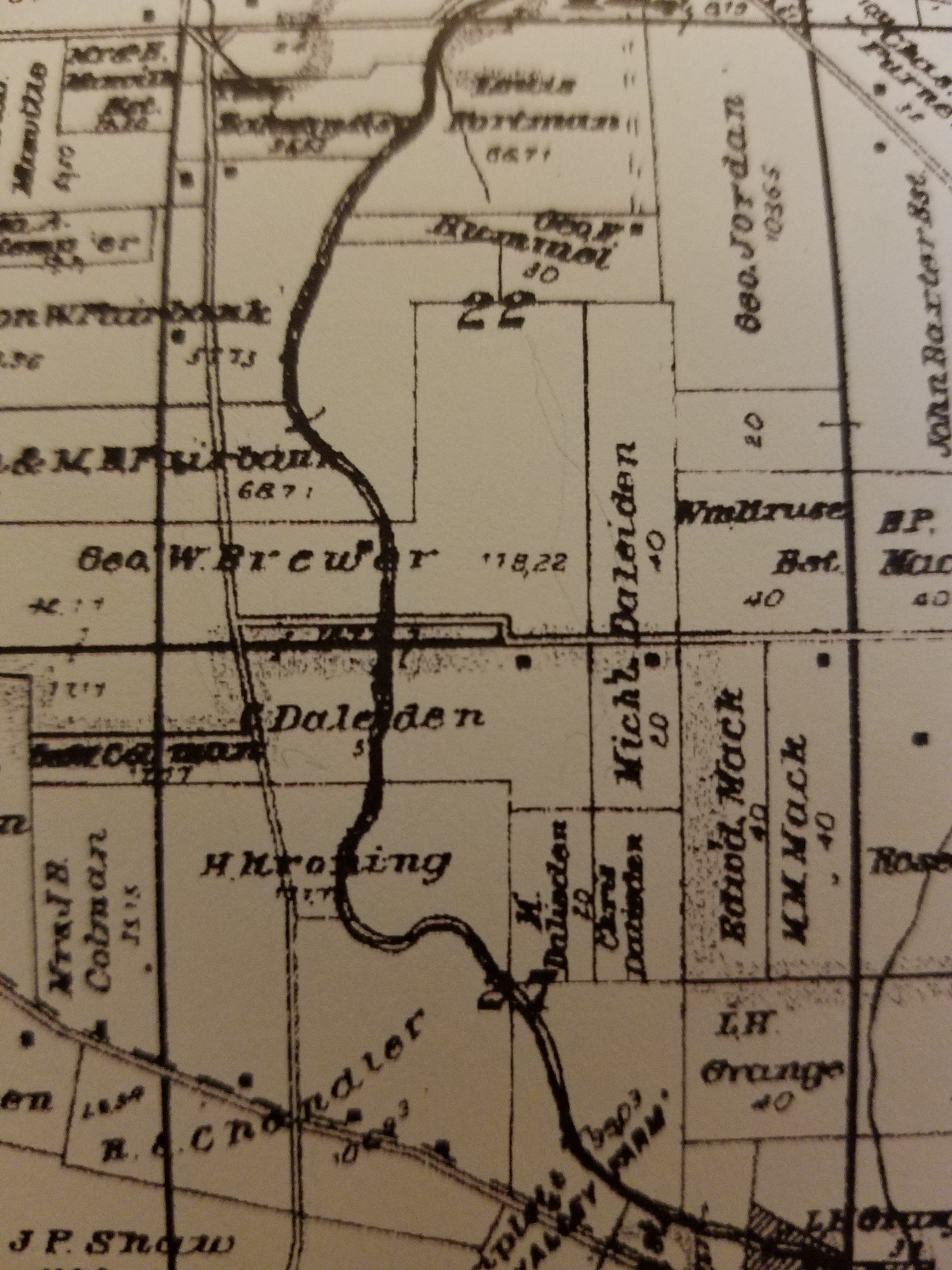
This 1904 map of Winfield Township in DuPage County Illinois shows that Michael Daleiden owned property. Michael owns forty acres of land. One of the two lots were a field with no structures on the property. Christopher Daleiden (Michael’s brother) appears to own fifty acres One of the lots is a field with no structures on the property. Christopher in 1904 also owns property in Winfield. Note on this map Mack Road’s dogleg in the road as it heads west over a bridge on the West Branch of the DuPage River. Source: 1904 Atlas of DuPage County Illinois, Illinois Digial Archives.
The 1904 map shows the area platted as Fredericksburg in Winfield Township in DuPage County Illinois. This is now know as the Village of Winfield. Christopher Daleiden owned a substanial amount of property in the Village at this time. His home in lot number 3 and 4 was near and to the north of the Church, Parish House and School of St. John the Baptist Roman Catholic Church. Source: 1904 Atlas of DuPage County Illinois, Illinois Digial Archives.
I began my research into my family history and genealogy in 1982. I find it rewarding and something that I find makes time pass quickly. I lose myself when doing research and writing. In mid January 2022 I retired following a thirty-five year career as a professional Librarian. In retirement I now have the time (especially during the winter months) to begin writing my family history.
In this posting I will provide tips and advice on researching your family history. Most of my research has been Illinois and DuPage and Kane County centric. My maternal side dates back to 1852 in the Dupage County Illinois area. That is 170 years and generations living in the same location.
I support and encourage people to become members of professional genealogical organizations. I am a long-time member of the DuPage County Illinois Genealogical Society and the Illinois State Genealogical Society. The benefits of joining a Society outside of print and online publications and newsletters are the programs that each of the Societies sponsor. There is also the advantage of connecting with other individuals working on their own family histories.
In my research I use secondary sources to supply historical and social history context to my research. Secondary sources can include books, journal articles, speeches, reviews, research reports, and more.
Promotion Alert: I am a promoter and proponent of the use of your local public library. One reason to use your library is that you are already paying for the services a public library offers via your local property tax payments. I love my local Libraries. They have in their collections many local and state historical materials that provide background information and historical context of the state and the communities your family lived in while they were alive. There are a lot of materials that are not available for free on the internet and may just be waiting for you on library shelves.
Here is a list of some of the books that I found valuable in my research on Winfield Illinois when seeking photos and background information on the history of the town:
Louise Spanke. Winfield’s Good Old Days: A History. Winfield Public Library. 1978. Jim McGuire. Images of America: Winfield. Arcadia Publishing. 2017.
County histories nicknamed by historians “mug books” due to the photos/illustrations/engravings of local residents contained in the volume. The mug book was sold by subscription and many of the people living in a county contributed their family histories. One cautionary note: the mug books should be used with a critical eye as the dates and material may be incorrect or contain biases as the biographies and genealogies were written by family members on their ancestors. Many of the relatives and editors wanted to portray their relatives in a positive light. Regardless of this cautionary note, mug books are still helpful and a starting point in your research. Here is the citation for the 1882 DuPage County mug book:
This is an example of a photograph (or “mug” shot) from the above volume. This is Erastus Gary an early settler of Winfield Illinois Township. His property is now the St. James Farm Forest Preserve and part of the Forest Preserve District of DuPage County Illinois.
Another resource is your local countycourt house. Materials available at the court house include: real estate transactions, probate records, naturalization, and birth and death records. An example, I was able to view the Daleiden family probate records at the DuPage County Court house. For a fee the Clerks at the court house can copy materials for your own files. I was also able to locate the actual deeds to properties owned by the Schlick family. One of Casper Schlick’s Deed dated back to the early 1860s.
Newspapers are another source of material for your family history. For example, I was able to review microfilm copies of the Wheaton Illinoian at the Wheaton (Illinois) Public Library. Many of the Daleiden, Schlick and St John Church articles were from the Illinoian. For research that I have been undertaking for the Forest Preserve District of DuPage County Illinois on the St James Farm Forest Preserve in Warrenville Illinois I have been calling upon the Librarians at the Nichols Naperville Public Library main branch in downtown Naperville Illinois in DuPage County. The Librarians were able to provide PDF scanned copies via e-mail of articles pertaining to Frank Gorton and the Chauncey and Brooks McCormick families who owned the farm. The Naperville Library staff were able to help me locate materials in their copies of the Naperville Clarion newspaper.
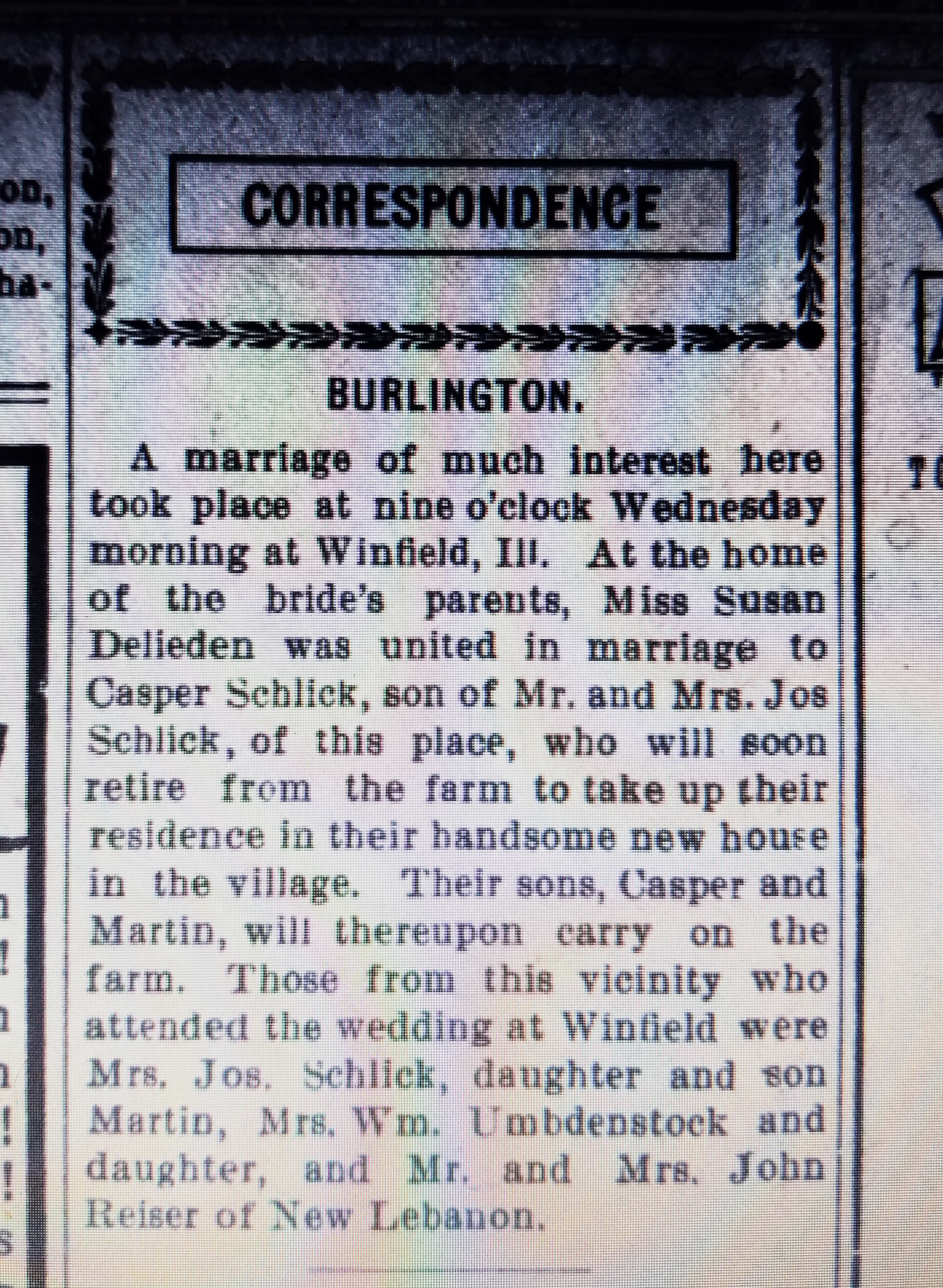
Newspapers contain local events and news during a particular time and era. Newspapers such as the Hampshire (Illinois) Register published in Hampshire Illinois in Kane County provided extremely helpful accounts on news and events in the lives of the Joseph and Mary Ann Schlick family of Burlington Illinois in Kane County. Most newspapers of the era contained columns that collected news from family and neighbors on family events and lives. The articles can add some meat to your writing and compiling of your family history. They were the Facebooks of their time. I concentrated on the local town columns. They were the Facebooks of their time. I was able to obtain ( in the 1980s) copies of the newspaper on microfilm from the Illinois Sate Historical Library in Springfield Illinois via my local library’s Interlibrary Loan Services. To locate newspapers where ones relative lived anywhere in the United States begin with the Library of Congress website on newspapers.
This is a clipping from the Hampshire Illinois Register newspaper of 1906. It tells the story of my great great grandfather and grand mother Susan and Casper Schlick’s wedding.
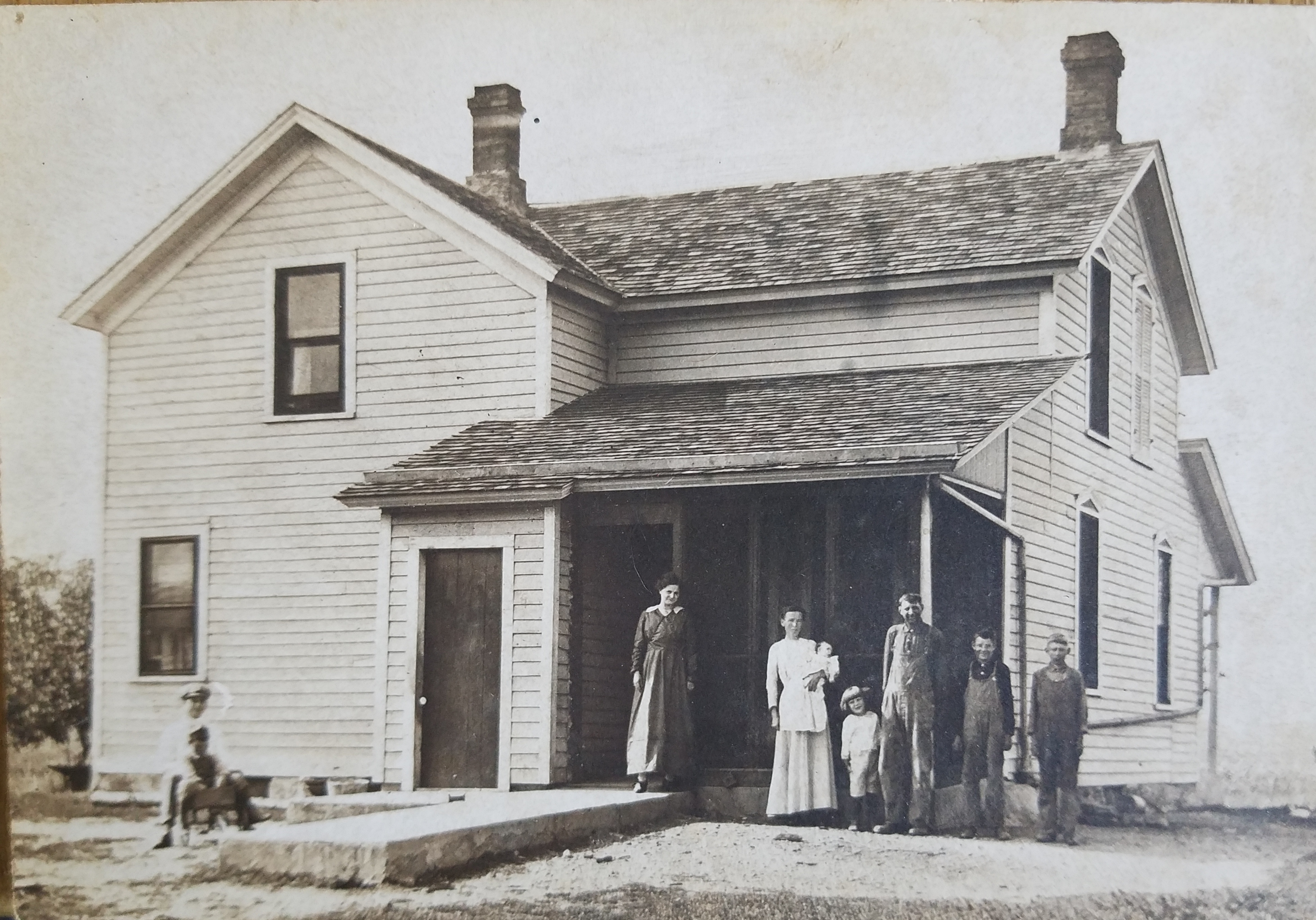
A vintage picture Post card view of the Schlick family in front of their homestead on Mack Road Winfield Township DuPage County Illinois. The farm primarily raised dairy cows and crops. Left to right: (On tricycle) Frank (Francis Joseph) Schlick and unknown child. (On the south facing porch near the kitchen entrance) unknown woman, Susan (nee Daleiden) Schlick holding the infant John Schlick, unknown child, Casper Schlick (in the bib overalls), Albert Schlick and an unknown child. The date of this photo is circa 1916. (Photo credit: Frank J. and Mae C. Schlick Estate)
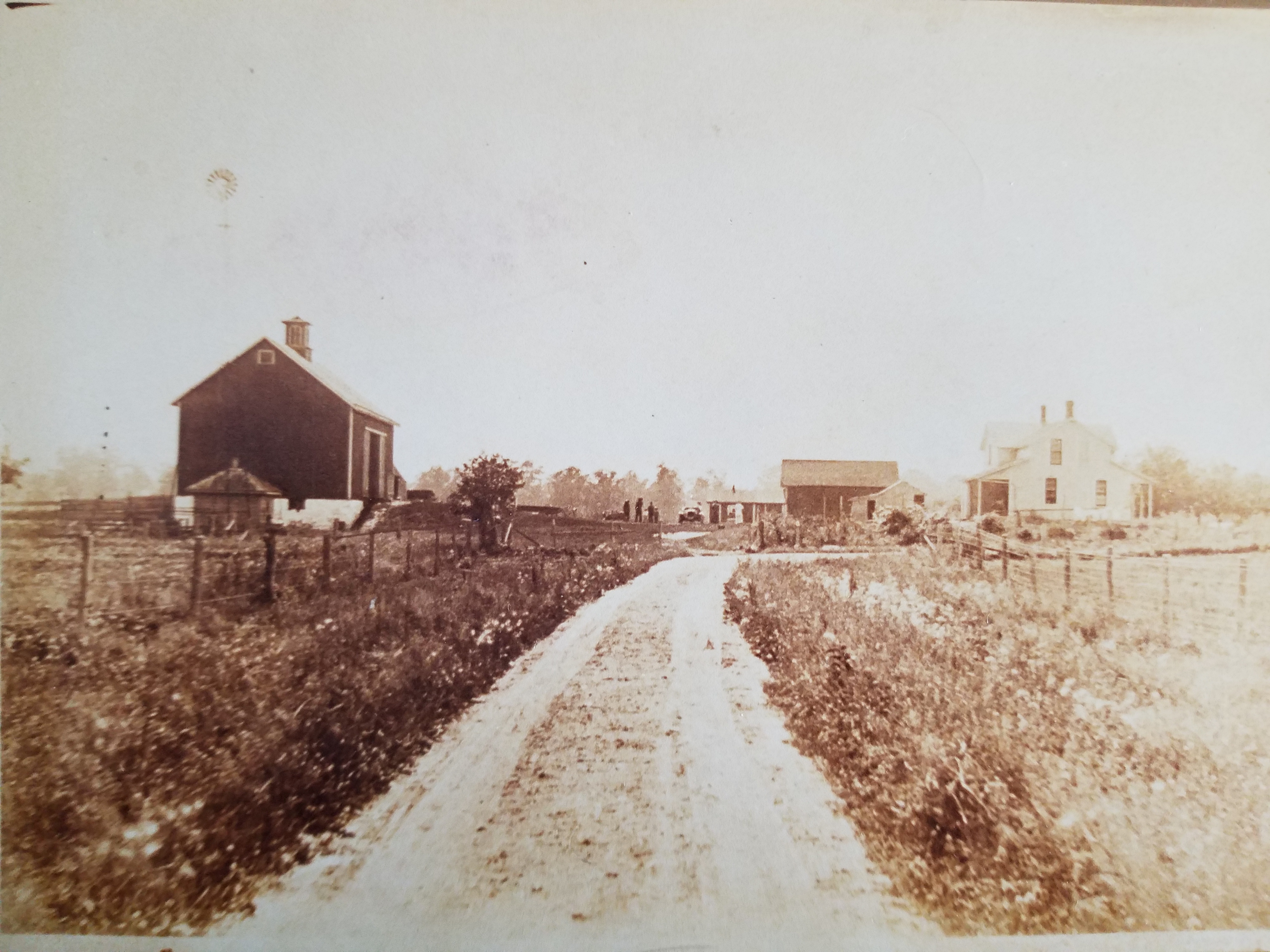
The Daleiden/Schlick (Casper and Susan) homestead farm looking west on Mack Road in Winfield Township DuPage County Illinois. Note: The West Branch of the DuPage River is just west of this farm property. Today this property of part of the Blackwell Forest Preserve property of the DuPage County Forest Preserve District of DuPage County Illinois. Back in the early days the current Mack Road took a very sharp right hand “dogleg” turn to the right/north and then continued west over the Dupae River to the “Turner Road” (now Illinois State Route 59). The old Turner Road ran north and then north west toward the town of Turner Junction now know as West Chicago. This photo is circa late 1890s. (Photo credit: Frank J. and Mae C. Schlick Estate)
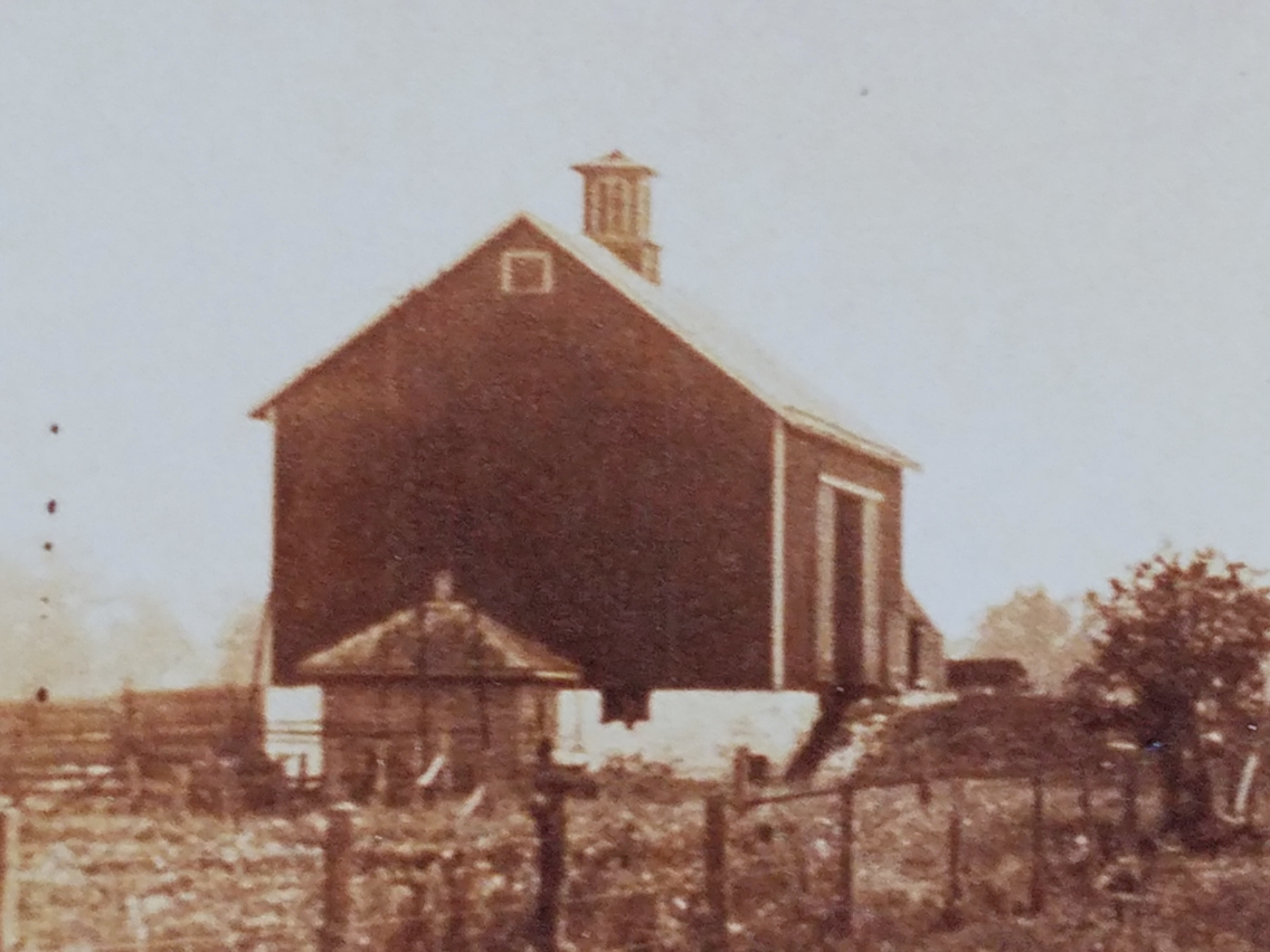
This is the so called “Bank Barn” the Daleiden and Schlick families used on their farm to house their herd of dairy cows on the bottom floor. The upper portion of the barn contained a threshing floor and plenty of storage for the hay, alfalfa and grain used to feed the cows. Per my Grandfather Frank Schlick the stones for this barn were quarried from the Naperville Quarry. The smaller stone structure in front of the barn was the milk house and pump house for the windmill. The windmill can be seen (in one looks closely) in this photo telescoping over the barn and milk house. This photo is an enhance photo from the above photo taken in circa late 1890s. (Photo credit: Frank J. and Mae C. Schlick Estate).
St John the Baptist Roman Catholic First Church Building Erected 1867. The barn to the left after 1900 would be owned by Christopher Daleiden’s and would be near his new home on Church Street in Winfield following his retirement from farming on Mack Road. (Photo: St. John Church Archive).
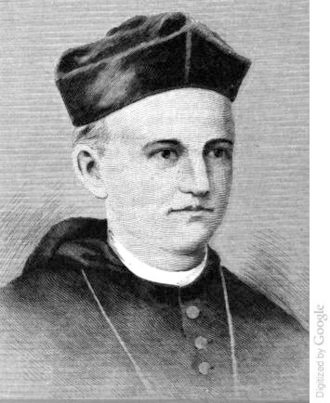
Early in 1867 a delegation of German immigrants from Winfield Illinois set out to meet with the Right Reverand James Duggan, Bishop of Chicago. The delegation included: Nicholas Berkes, John Schramer, Anton Schmitt, Nicholas Gerwas and John Hix. Other residents included: Michael and his brother Christopher Daleiden, Michael Besch, Nicholas Fuchsen, Nicolas T. Schramer, Jacob Berkes, Nicholas Enders, Michael and Valentine Dieter, Johann Germann, Peter Wagemann, Matthias Schramer, George Klein, and the Sieber brothers, Michael, Bartholomew, and Donatius.
Bishop Duggan of Archidiocese of Chicago. The Bishop met with residents of Winfield on their peition to build St Johns in Winfield. (Source: Wikipedia entry on Bishop Duggan. Link: https://en.wikipedia.org/wiki/James_Duggan)
A warranty deed was immediately drawn up and filed on February 21, 1867 and recorded with DuPage County as Document 8277. The deed contained one acre of land on which the current St. John Church currently stands. The grantor was Julius M. Warren to grantee Right Rev. James Duggan, D.D,, Bishop of the Diocese of Chicago. The deed stipulated the payment of $1, and “the further consideration that there be erected on the land hereby conveyed a church building at least 30 feet by 50. Also a dwelling for priest and a school house“. (See pp, 118 to 128, Louise Spanke, Winfield’s Good Old Days: History( Winfield Public Library Board, 1978).
Early photo of St John Parish buildings (Circa 1906). The building to the left is the School building. The home to the right and behind the Church is the Rectory. Note the wide open spaces and absence of homes that today exist along Church Street in Winfield Illinois. (Photo: St John Church Archives).
In 1869, a rectory and home for the Pastor Father John Wiederhold was temporarily made in the new home of Nicholas Enders (still standing at the northeast corner of Beecher and Church Streets in Winfield). The parish purchased from Colonel Warren (the founder of Warrenville Illinois) the stone house across from the church and remade it into a school building.
Colonel Julius Warren an early landholder in Winfield Illinois
The transfer of the land was made at a price of $1,800 on May 18,1869. The land purchase also included a one acre parcel of land on Gary’s Mill Road for the St. John Cemetery.
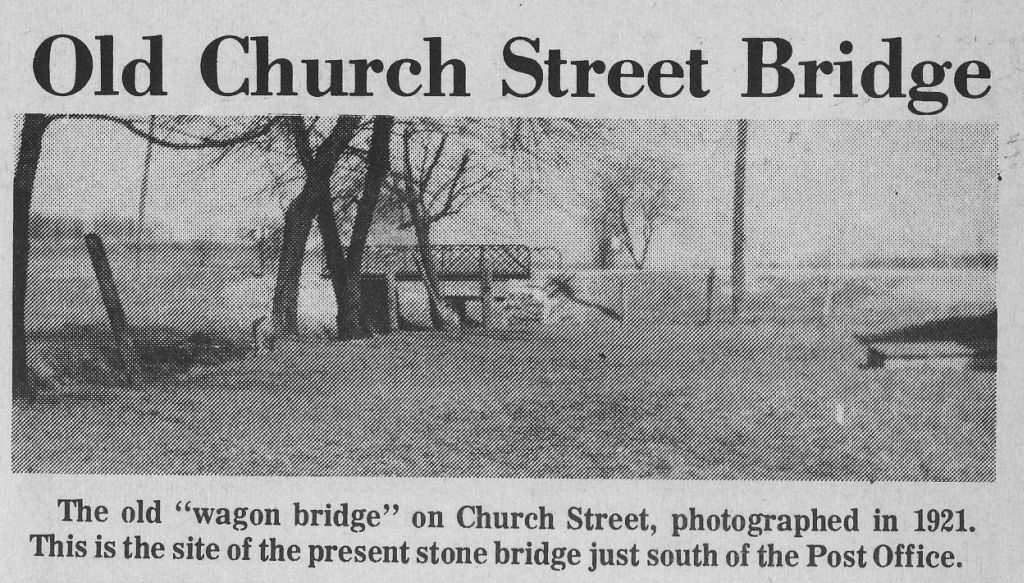
The old bridge over Church Road a block or so from the Chicago and Northwestern Railroad Tracks. This bridge was replaced in 1940 with a grant from the WPA (Works Progress Administration). This was a Franklin D. Roosevelt New Deal project funding local projects to put people back to work. The 1940 bridge is still being used today! (Source: Winfield Glimspes Blog: https://winfielder.wordpress.com.).
The first wedding to take place in the new Church was that of “Christ Daleiden and Margaret Weiland” the first pastor Father M. Corbinian officiated at the ceremonies. This blogger’s parents George and Louise (nee Schlick) Davis would be married in the same church some eighty years latter in August of 1959. Christopher and Margaret were my mother’s great-great-grandparents and my great great great grandparents. My two sisters (Mary and Sandra Davis ) would both be married in the new St John’s church as well many years later. I would be baptized, receive my first communion and be confirmed into the Catholic faith at St. John’s. St. John’s has played a big part in the faith life of my family for over 150 years!
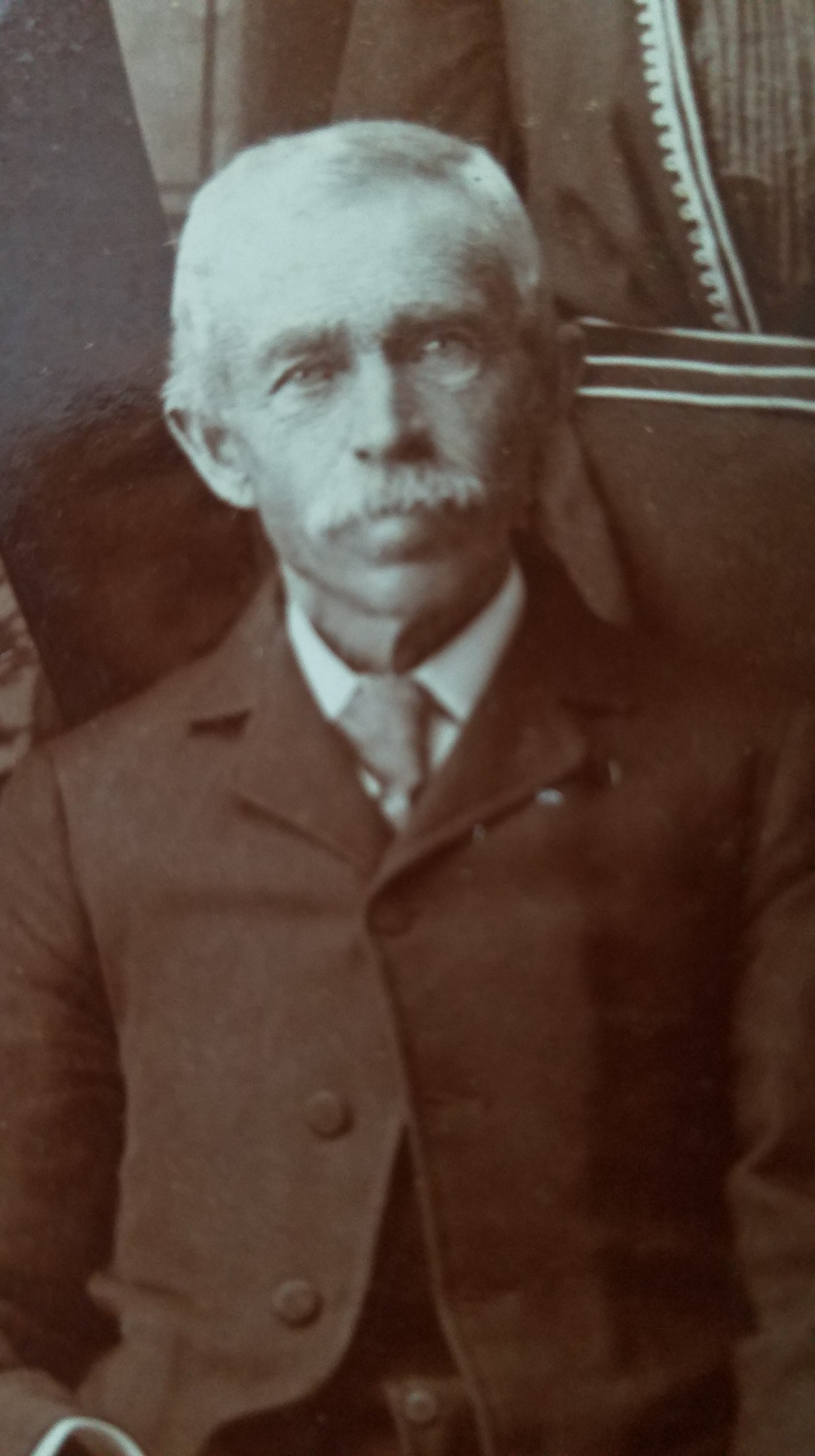
Christopher Daleiden (Note the monocle over one eye). Photo courtesy of the Frank J. and Mae C. Schlick Estate.
In an 1882 History of DuPage County, Rufus Blanchard writes: This church was built in 1867 by the people of Winfield. It was first attended to by the Benedictine Fathers from St. Joseph’s Church, Chicago until 1869, March 1. After this date, Rev. Father John Weiderhold was appointed as pastor of this church, who keeps the pulpit there at this time [1882]. The parish numbered, at its beginning, about thirty families, but at present [1882] the number is about eigthy-five. In course of time, the church, being only 45 x 30 feet long and twenty-seven feet high, became too small for the still growing congregation, and in 1879 they found it necessary to enlarge the church to the extension of 100 feet. In February, 1880 it was completed, and duly blessed on the 2nd of that month by Very Rev. J. McMillen [ Source: Rufus Blanchard. History of DuPage County, Illinois. O.L. Basking & Co., Historical Publishers 1882, page 268.}.
On August 17, 1906 lightning struck the new church. Here is an account per Winfeld Historian and Librarian Louise Spanke:
“During an afternoon storm, a single bolt hit the church’s wooden steeple, and half an hour later only the smoke-stained walls remained. The alarm spread as the fire, and teh villagers worked frantically to save what they could. Christ Daleiden and William Zeier had to be ordered down from the blazing roof by Father Weiderhold, so the story goes. Only the alter, pews, stations of the cross, and communion rail could be saved.” (Source Louise Spanke, Winfield’s Good Old Days: A History of Winfield Illinois (1978) page 123).
The August 24 1906 Wheaton Illinoian reported:
“Wheaton and West Chicago hook and ladder companies were called, and to their work is due the saving of the buildings about the church and perhaps the town. Rev. Father Weiderhold is pastor of the church. He states that the total loss (the building was valued at $12,000) after insurance will be approximate $6,000. The gold and silver fixtures in the church were also destroyed. In all probability the church will be rebuilt immediately.”
The Daleidens played an important part in helping to establish and maintain the St. John’s the Baptist Church in Winfield. Christopher per the above account was willing to risk his physical well being to save the church he loved and was instrumental in getting built during the 1906 fire.
Susan (nee Daleiden) Schlick is my great grandmother. Susan was born on her father Christopher Daleiden’s homestead farm on December 25 1877. The farm is located on Mack Road between Winfield and Illinois Route 59 on the banks of the West Branch of the DuPage River in Winfield Township DuPage County in Illinois.
For a short period of time prior to getting married Susan worked for the Forsythe Rest Room in Winfield as a housekeeper. The Forsythe Rest Room would later become the Chicago Tuberculosis Sanitarium and supported by the Jewish Charities in Chicago Illinois. This Sanitarium was located on the property now owned by Northwestern Medicine and called Northwestern Central DuPage Hospital.
Circa 1910 image of the Winfield Chicago Tuberculosis Sanitarium in Winfield Illinois. Credit: Chicago Daily News Photo Chicago History Museum
The Forsythe Rest Home is shown on the Winfield Township plat map as being located just north of the Village of Winfield Illinois in Winfield Township. This site is now occupied by Northwestern Medicine Central DuPage Hospital. This map also shows Susan’s fathers home and property “Chris. Daleiden” (10.5 acres) located just north of St. Johns Church in Winfield. The Matthias Elsen home and property (5 acres) is located just east of the Rest Home.
Susan married Casper Francis Schlick on October 10, 1906. Casper and Susan moved onto her father’s farm located on Mack Road near the West Branch of the DuPage River circa May 1910. The young couple had previously been farming on Casper’s father Joseph Schlick’s Burlington Illinois (Burlington Township Kane County Illinois) farm.
Susan Daleiden Schlick Circa 1900 – 1908
Susan and Casper had four children. Their first child was a girl (Mary). Mary unfortunately did not survive childbirth and was buried at St. Charles Borromeo Cemetery located outside Hampshire Illinois (Hampshire Township Kane County Illinois). Their oldest son (this blogger’ grandfather) was Francis (Frank) Schlick. Albert and John were other sons.
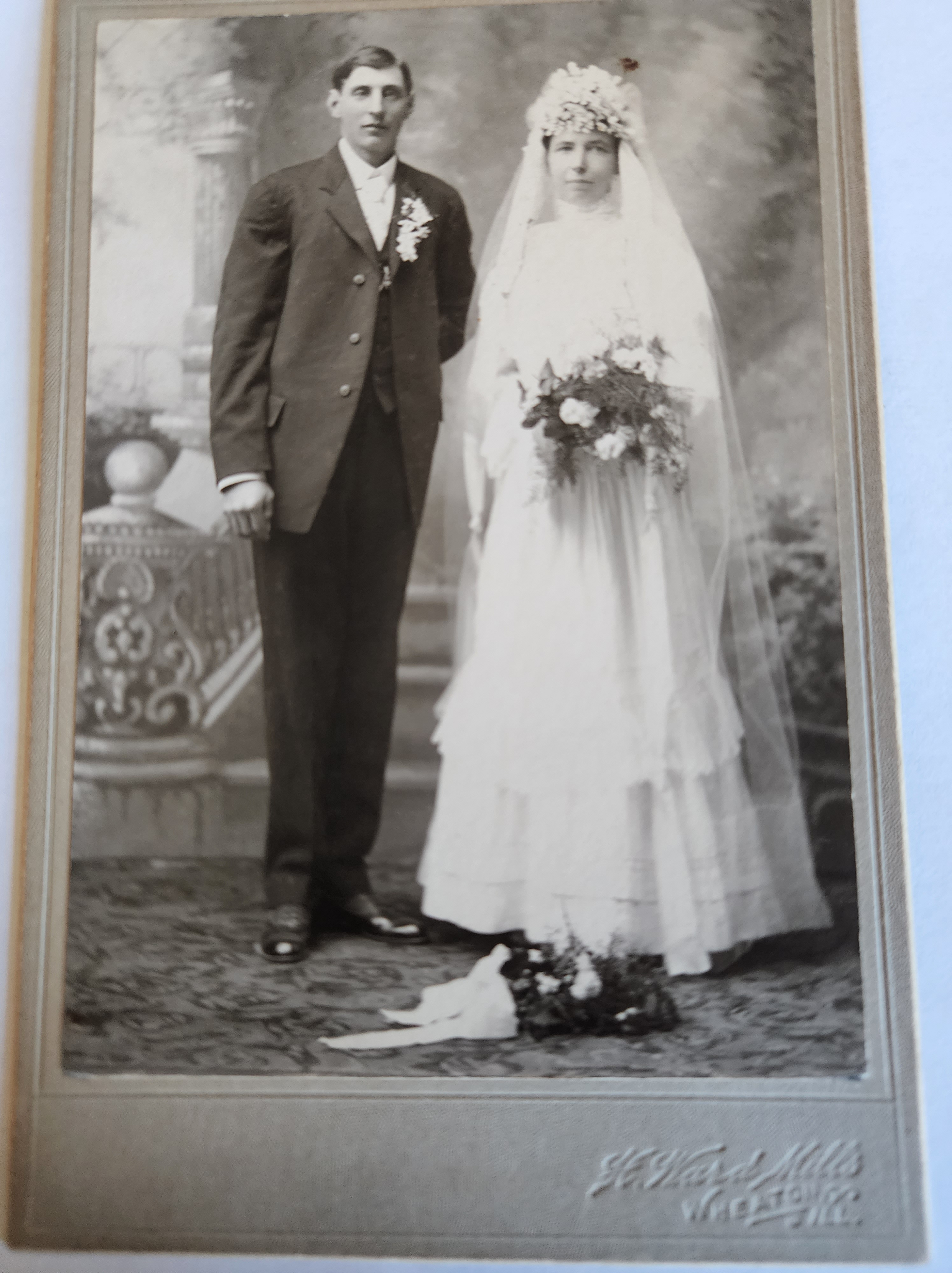
Casper F. Schlick and Susan (Daleiden) Schlick on their wedding day October 1906. This photo was taken by a well known Wheaton Illinois photographer Ward Mills.[Photo credit Frank J. and Mae Schlick Estate Photo Archived.]
Susan per an oral history interview with my mother Louise Eleanor (nee Schlick) Davis was a loving person. My mother recalls how kind she was when my mom visited with her on the farm and that she was a great cook. Susan was a very active person and hard worker to help Casper to keep the family farm running. In general and to put this in historical context the midwestern farm wife was an active participant in the running of a farm. Susan for instance had a substantial vegetable garden just east of the house facing Mack Road. She also canned vegetables and cared for the chickens on the farm. The farm per my Grandpa Schlick was very self sustaining. On occasions the Schlicks would drive in town to West Chicago to the A & P Grocery Store (located at the corner of Illinois Route 59 and Main Street in West Chicago) and to do banking (depositing egg money) at the 1st National Bank of West Chicago Illinois.
Susan Schlick on her wedding day. This photo was taken in October 1906 in Winfield Illinois. This is her fathers home which was located just to the north of St. Johns Church. (Photo: Frank J. and Mae C. Schlick Estate Photo Archive.).
Susan died in the home in “the same room in which she was born” (Obituary page 1 The Daily Journal November 12 1945). My mother recalls as a young girl going to the front parlor of the Mack Road farm house to the wake where parishioners of St. Irene’s Catholic Church recited the Rosary at 8:00 p.m. the evening prior to the funeral and requiem mass being held at St. Irene’s Church in Warrenville Illinois. The family then drove her remains to St. John’s Cemetery on Gary’s Mill Road in Winfield Illinois to be buried. Reverend Aloysius Stier was the priest that officiated at the funeral.
Casper would outlive his wife for many years – passing way at the age of 91 – on February 6, 1970.
Susan Schlick’s Obituary from the front page of the Wheaton (Illinois) Daily Journal dated Tuesday, 13 November 1945.
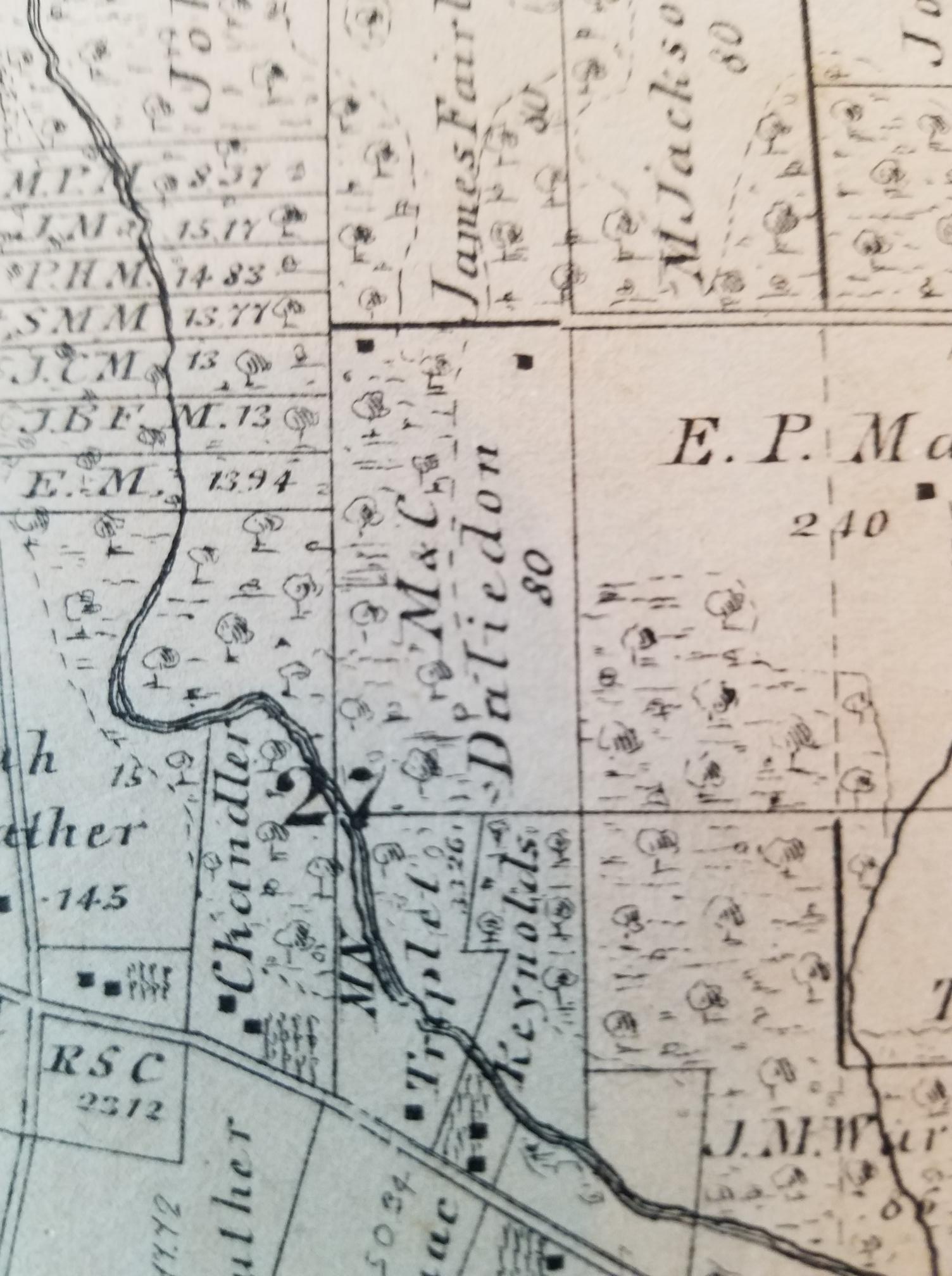
This excerpt shows an 1874 map of the “M & C Daleidon” (Michael and Christopher) 80 acre property at the end of Mack Road in unincorporated Winfield Township in DuPage County Illinois. Note the West Branch of the DuPage River located just west of the property. Mack Road was a simple dirt road and did not go through to what is now Illinois Route 59 or as it was know in the 1870s the Turner Road. The Turner Road would take people north toward the town of what is now know as West Chicago, Illinois.
The Daleiden’s neighbors to the east are the Edward Packer Mack Family. The Macks were substantial landowners in Winfield Township and early immigrants to Illinois. I will do a short article about this family in a future blog. Mack Road is named after this family.
The 1910 U.S. Census provides information that Christopher (Chris) and his wife were living in the Village of Winfield Illinois. He is a ‘retired farmer”. The 1904 Atlas of DuPage Countyshows the main downtown lots and sections of Winfield Illinois.
Winfield was originally plated as the town of Fredericksburg. Its is named Winfield after the military leader General Winfield Scott. Scott was a leader in the Black Hawk War of the early 1830s.
The Daleidens home was in lots 3 and 4 just to the north and near the St. John the Baptist Catholic Church. The map also shows that Christopher owned 10.6 acres of land along the creek that ran through the Village and toward the West Branch of the DuPage River. The 10.6 acres per an oral history with my Grandfather Francis “Frank” J. (Joseph) Schlick was a hayfield. This was along the street now known as Beecher Street. On Christophers propertyon Beecher Street was located the Winfield Cooperative Creamery a major business in the Village. I will do a blog post on that business in the future.
The railroad that runs through the middle part of the Village is what is now (2022) know as the Metra Union Pacific Railroad west line that terminates at Chicago to the east and Elburn to the west.
(Photo above circa early 1900s) The Daleiden family of Winfield Illinois Township. Front row is left to right is Christopher Daleiden and Margaret (Margarethe). Second row: William, Susan (Schlick), Catherine (Armbrust), and Barbara. Barbara later became Sister Mary Philippina Daleiden a member of the Poor Handmaids of Jesus Christ. (Photo from the Frank J. and Mae C. Schlick Estate).
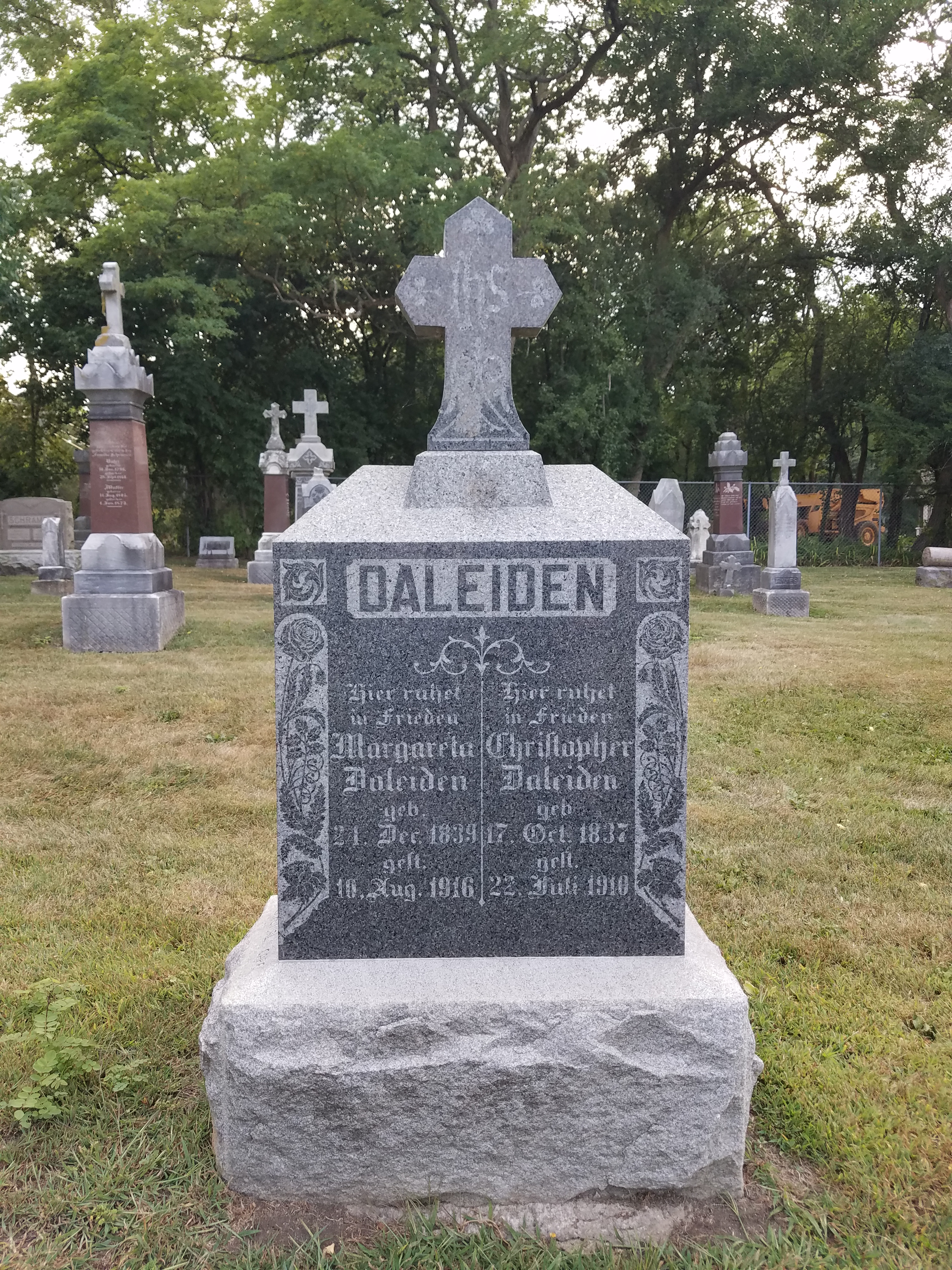
(Above photo) The headstone marking the graves of Christopher and Margaret Daleiden. This grave is in the St. John the Baptist Roman Catholic Cemetery in Winfield Illinois (Winfield Township, DuPage County Illinois).














 Schlick Daleiden Family DuPage/Kane Co. Blog